
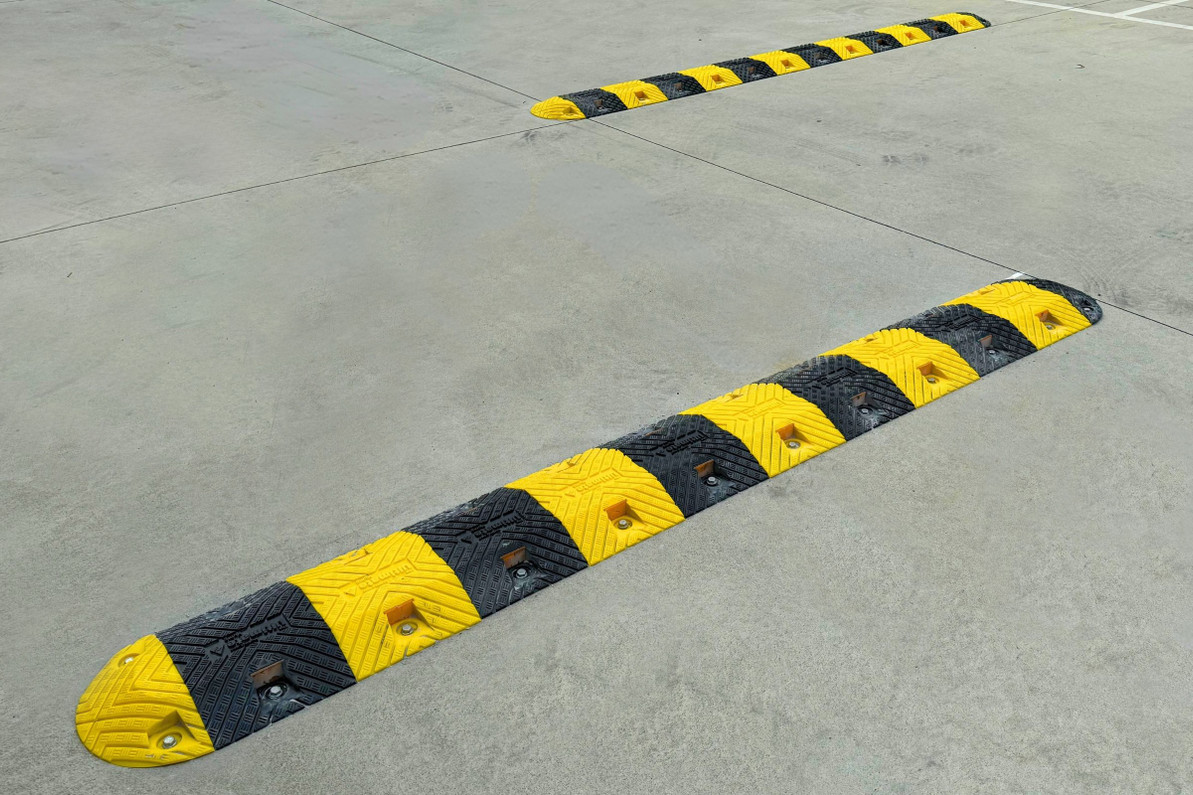
Speed Bump Vs. Speed Hump: What's The Difference & Which Do You Need?
Speed bumps create a sharper slowdown, while speed humps help slow traffic across a wider raised surface. The right choice depends on your site, vehicle speed, traffic volume and local compliance requirements.
This guide explains the main differences so you can choose the right traffic calming product for a road, driveway, car park or commercial property.
Key differences between speed bumps and speed humps
The key differences between speed bumps and speed humps are profile, driver impact, target speed and suitable location. A speed bump usually creates a sharper response, while a speed hump supports a slower and more controlled movement.
Speed humps may also be used to increase compliance with a 40 km/h speed limit in temporary work areas, but they must be removed when the 40 km/h speed limit is no longer required, such as when workers have left.
Below is a simple comparison:
|
Feature |
Speed bump |
Speed hump |
|
Shape |
Shorter and more abrupt |
Longer and gentler |
|
Main purpose |
Stronger speed reduction |
Controlled traffic movement |
|
Best suited for |
Very low-speed private areas |
Car parks, shared access areas and commercial sites |
|
Driver experience |
May feel more sudden |
Easier to cross at slow speeds |
Profile heights and dimensions compared
Profile height and width affect how vehicles cross a traffic calming device. Speed bumps usually have a shorter, sharper profile, while speed humps spread the raised section over a longer distance.
Product dimensions can vary, so commercial sites should check specifications, installation surface and relevant traffic guidance before choosing a product. When installing a Watts profile hump on known bus routes, Transport requires a maximum profile height of 75 mm to help reduce bus suspension bounce and damage to assets.
Target travel speeds and traffic flow control
Speed bumps suit areas where vehicles already need to move very slowly, such as short driveways or private access points. Speed humps are often better for car parks, industrial yards, shared lanes and access roads because they slow vehicles without stopping traffic too sharply. Sites used by trucks, vans or emergency vehicles may need extra review before installation.
Australian standards and legal compliance for traffic calming
Traffic calming requirements in Australia can depend on the site type, road ownership, council rules and product location. Public roads may need council or road authority approval, while private commercial sites still need safe traffic movement, pedestrian access, signage and visibility.
Relevant guidance may include car park design standards, traffic control device standards and local area traffic management guidance.
Before installing a speed hump or speed bump, check:
- Who owns or manages the road
- If council approval is needed
- If signs or line marking are required
- If emergency access must remain clear
- If the surface is suitable for fixing
- If the product suits cars, vans, trucks or forklifts
Material selection: Recycled rubber vs linear low-density polyethylene
The best material for a speed hump or speed bump depends on site use, weather exposure, vehicle type and installation needs. Recycled rubber often suits car parks, warehouses, shared access lanes and commercial sites, especially for modular layouts.
Linear low-density polyethylene, also called LLDPE, may suit outdoor sites where a lightweight, moulded or modular option is preferred. For both materials, check height, length, load rating, fixing method, visibility features and end cap options before ordering.
Application guide: Where to install bumps vs humps
Speed bumps and speed humps should be installed where vehicle speed creates a safety, access or traffic flow concern.
- Car parks: Speed humps can slow vehicles near pedestrian crossings, entries, exits, ramps and busy parking aisles without stopping regular movement too sharply.
- Driveways: Speed bumps may suit short private access points, while speed humps may suit longer shared driveways where vehicles need to move slowly.
- Warehouses and industrial sites: Speed humps may help manage traffic near loading areas, pedestrian crossings, roller doors and shared vehicle zones.
- Commercial properties: Traffic calming can help manage vehicles near customer parking, service lanes, loading zones and building entries.
- Schools, childcare centres and pedestrian-heavy sites: Speed control may need to work with crossings, signs, barriers, line marking and pedestrian paths.
What should you check before choosing a speed hump or speed bump?
Before choosing a speed hump or speed bump, check vehicle type, traffic speed, surface, visibility and site approval needs. A product that works well in one car park may not suit another.
Use this quick checklist:
- Is the site private, public or shared?
- Who manages the road or driveway?
- What vehicles use the area?
- Are trucks, vans or emergency vehicles involved?
- How fast are vehicles travelling now?
- Are pedestrians crossing nearby?
- What surface will the product be fixed to?
- Are signs, reflectors or line markings needed?
- Will the product affect drainage or access?
Choose the right speed humps with Safety Xpress
Safety Xpress supplies traffic calming products for car parks, commercial properties, warehouses, driveways and shared access areas. The range includes speed humps and related car park safety products that can help manage vehicle movement and improve site safety.
If you are comparing speed bumps and speed humps, start with the location, traffic flow, vehicle type and compliance requirements. For help choosing the right speed humps with Safety Xpress, contact us.
Recent Posts
-
Free Workplace & Warehouse Safety Inspection Checklists (PDF Download)
Keeping workplaces safe is what matters most to us at Safety Xpress. So let’s ask a simple question: …15th Oct 2026 -
Traffic Signs for Car Parks
What Traffic Signage Does My Car Park Actually Need? The Complete Compliance Guide There is no singl …2nd Oct 2026 -

Which Safety Mirror Is Right For Your Space?
Which Safety Mirror Is Right For Your Space? Improve Visibility and Reduce Blind Spots in Workplaces …14th Aug 2026